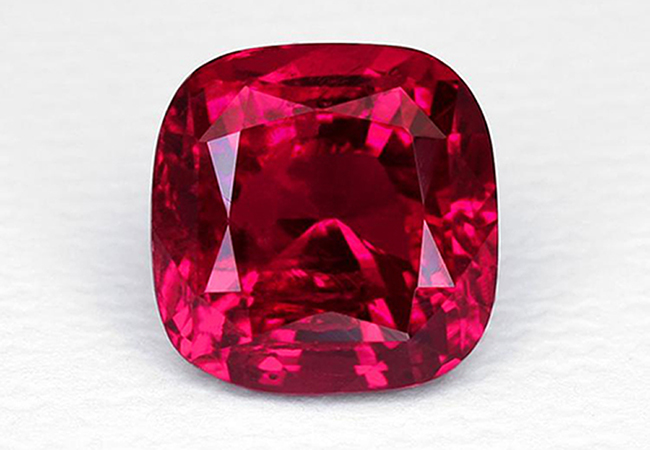
Ruby | JULY BIRTHSTONE
04.07.16
Ruby is the official birthstone for July and traditional gift for 40th wedding anniversaries.
Ruby (Latin, ruber - red) is the red variety of the mineral corundum, one of the hardest minerals on Earth. These gemstones have excellent hardness – following only the diamond.
Pure corundum is colourless. Slight traces of chrome, iron, titanium or vanadium are responsible for the colour. Only red variety of corundum are rubies; all other colours are referred to as sapphire. The red colour is mainly caused by the element chromium.
Colour is the most significant factor determining a ruby’s value. The brightest and most valuable is blood-red or 'pigeon's-blood' colour; and as the colour gets more orangey, the quality of the stone decreases. The highest-quality rubies have vivid colour saturation.
After colour comes clarity: similar to diamonds, a clear stone commands premium quality. However, a ruby without any needle-like rutile inclusions may indicate that the stone has been treated. In fact, rubies are exposed to more treatments than almost any other gemstone.
Cut and carat/weight come next. Large fine-quality rubies can be more valuable than diamonds of a similar size. Also, custom cut and recut stones usually cost more per carat.
Rubies in its finer qualities are quite rare. For a long time, India was regarded as the ruby's classical country of origin. Today, most gem-quality rubies of vivid red colour come from Burma (Myanmar). You can find more about Burmese rubies here.
The world's most expensive ruby is the Sunrise Ruby (below). The rare coloured gemstone became the most expensive jewel, that is not a diamond, to be sold at an auction. This 'pigeon's-blood' ruby was sold for the world’s record price of £19m in Geneva last year.
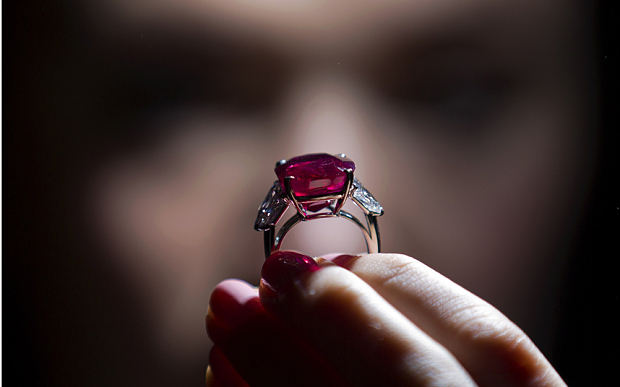
Image source: www.telegraph.co.uk
Main image: www.thenaturalsapphirecompany.com