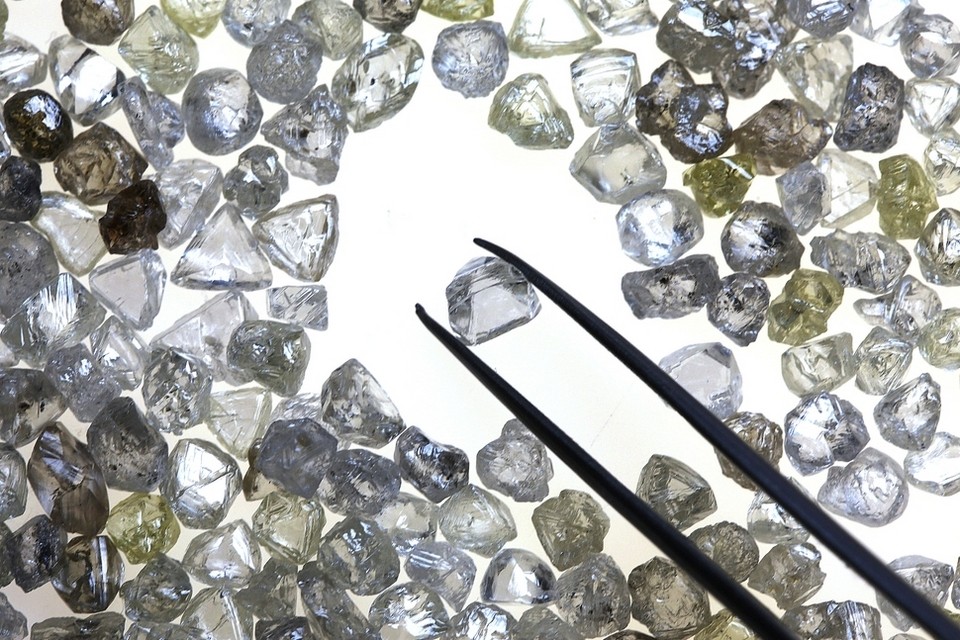
Lab grown diamonds
14.07.16
Do the origins of a diamond matter? Today, we have come to the point where diamonds can be created in laboratories, appearing practically indistinguishable from mined diamonds.
Synthetically created diamonds, also known as engineered, cultured or artificial diamonds, are grown in highly controlled laboratory environments, with the use of advanced technological procedures that duplicate the conditions under which diamonds naturally form.
While the term synthetic is often associated with imitation products, artificial diamonds are made of the same material as real diamonds - highly organized pure carbon.
When diamond was discovered to be pure carbon in 1797, there were many attempts to convert different cheap forms of carbon into a diamond. The first successes came almost a century later. The initial method involved heating charcoal with iron inside a carbon crucible in a furnace up to 3500°C. The molten iron was then rapidly cooled by immersion in water. The contraction from the cooling supposedly generated the high pressure required to produce a diamond.
In the 1940s, the United States, Sweden and the Soviet Union began their systematic research into growing diamonds using CVD and HPHT processes. As we already know, like coal or graphite, diamond consists of carbon. The main difference is the arrangement of carbon atoms in the material. Unfortunately, graphite is a more stable carbon form than diamond; therefore, diamonds are much rarer in nature.
To transform graphite into diamond, HPHT treatment is applied, by means of which diamond can be developed into a more stable carbon allotype. HPHT puts a pure, solid carbon source under high pressure and high temperature. With a catalyst, the pressurized and heated carbon crystallises into diamond. HPHT treatment is also used to improve clarity of diamonds, and you can read more about it here.
How diamonds are created using CVD process is explained in this short film:
Those two processes still dominate the production of synthetic diamonds.
In the late 1990s, the third method known as detonation synthesis entered the diamond market. This is when a diamond originates from a detonation of carbon-containing explosives in a closed chamber. In the right environment, diamond particles are formed at the front of the detonation wave in several microseconds.
The fourth method - ultrasonic cavitation - involves treating graphite with high-power ultrasound. Sufficiently powerful ultrasonic cavitation processes can produce the necessary combination of pressure and temperature to allow graphite-to-diamond transformation in metal melts. Currently, this method has no commercial application.
Some synthetic diamonds have properties such as hardness, thermal conductivity and electron mobility that are superior to those of most naturally formed diamonds.