Diamond extraction techniques
08.07.16
Where diamonds are found?
Diamonds were initially discovered in meteorites in 1888. However, the amount of diamond occurring in extra-terrestrial rocks was insignificant. The most prominent geologic occurrence of diamonds is in kimberlites; that are found in the upper sections of the Earth's crust.
Typically, kimberlites are only found in the tectonically stable centre of continents known as platforms or shields. They occur as pipes, veins, sills and dikes comprised of an alkali-rich igneous rock.
First diamond-bearing kimberlites were found in South Africa by Kimberley and De Beers.
How diamonds are found?
Traditionally, diamonds were discovered using two techniques: grease and X-ray.
Diamonds are hydrophobic, which means they don’t dissolve, absorb or mix with water. However, they easily stick to grease. So, traditionally mines use grease technology. This method involves placing diamond-bearing material onto a vibrating grease table or automated belt. In the process, diamond crystals stick to the grease, whereas other components found in kimberlite wash away.
Diamonds also display fluorescence when exposed to X-rays, so miners also collect light-emitting material.
However, the more valuable and rare Type IIa stones don’t respond well to X-rays. Therefore, grease belts have been the only way to recover these high-quality diamonds.
How diamonds are extracted?
There are four main diamond extraction methods such as open pit mining, underground mining, alluvial mining and marine exploitation.

Image: the Mirny Diamond Mine in Russia, open-pit, www.gelio.livejournal.com
Open-pit mining is the most commonly used technique. All open-pit mines share some common characteristics. They are dug on benches, which are usually four to six metres wide, depending on the machinery used. This is how the walls of open-pit mines become so angled and terraced. Such structure helps the walls maintain structural integrity, and prevent or minimize damage from rock falls.
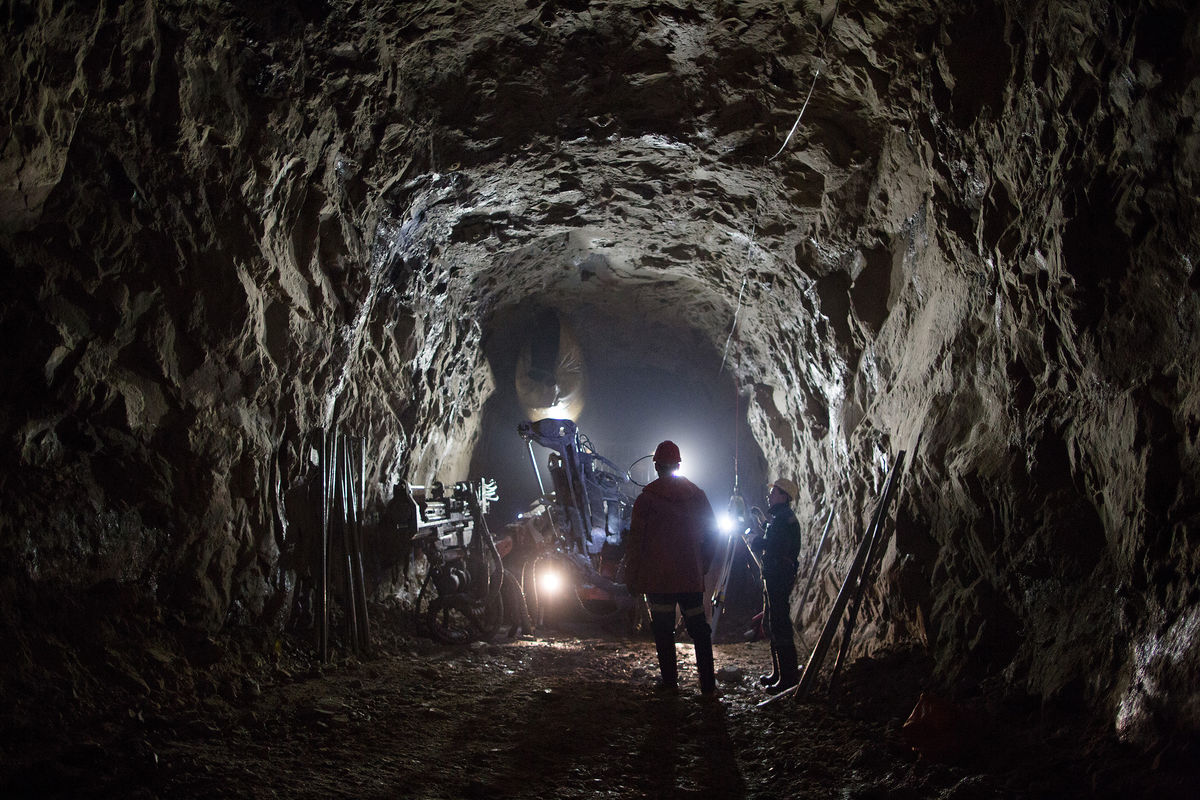
Image: underground mining, www.1newsmaker.ru
When open-pit mining becomes inefficient as diamond-bearing kimberlites go deeper in the earth’s crust, diamonds are reached with the use of underground mining.
Today, underground mines can be over a thousand metres deep; however, diamond content within them is decreasing with the depth. It is more expensive than open-pit mining and requires more complex management and equipment. When it comes to underground mining, block caving technique is most commonly used. It is an inexpensive and well-established method that involves blasting of large ore blocks, causing them to break or cave under their own weight, to provide access to a new block or level to be mined.
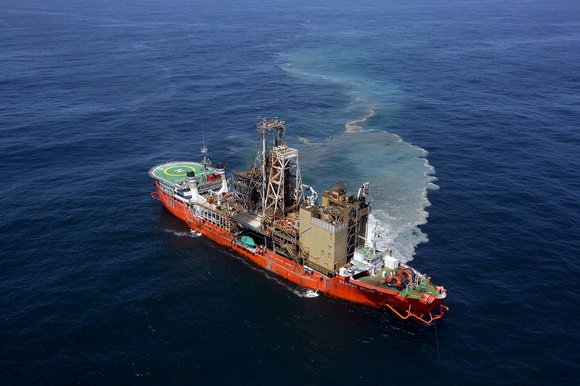
Image: marine mining, www.thesundaytimes.co.uk
Another method of diamond extraction, marine mining, allows miners to extract diamonds from the ocean floor at depth of over hundred metres. Horizontal marine mining involves a seabed crawler to bring diamond-bearing material to the surface, while vertical marine mining uses a large drill for the same purpose.

Image: artisanal mine in the southwest Democratic Republic of Congo, www.time.com
Alluvial mining is most common in developing countries; where diamonds and other minerals are extracted by small-scale miners. In alluvial deposits, simple artisanal mining techniques are often used. The process involves digging and shifting through mud, sand and gravel using sieves and shovels, or even bare hands. Artisanal miners usually operate outside the legal framework, lack regulation and safety measures, and suffer from low productivity. However, this method has a great potential for the diamond mining industry. You can find more information on the benefits of artisanal mining here.